
IgX
Test

The Attomarker IgX Test

Providing further insights into the SARS-CoV-2 immunity endotypes.

The COVID Antibody Spectrum Test is known to characterise long COVID individuals into three broad categories: hypoimmune (65%), hyperimmune (10%) and uncharacterised (25%).

We are now able to provide further distinction into these three groups, with the IgX map. This test assesses antibody concentration to SARS-CoV-2 variants, but for different IgG subtypes.

  • IgG1 is the most abundant IgG subclass (60-65% of total IgG) and reflects general anti-viral and vaccine-induced immunity.
  • IgG2 accounts for 20-25% of total IgG and is elevated in response to bacterial infections
  • IgG3 makes up 10% of total IgG and has a short half-life once an infection is over (~7 days), suggesting its immunological role in the immune system following recent or active antigen exposure
  • IgG4 by comparison is the least subclass abundant (3-6% of total IgG) and is usually produced in response to chronic viral exposures.


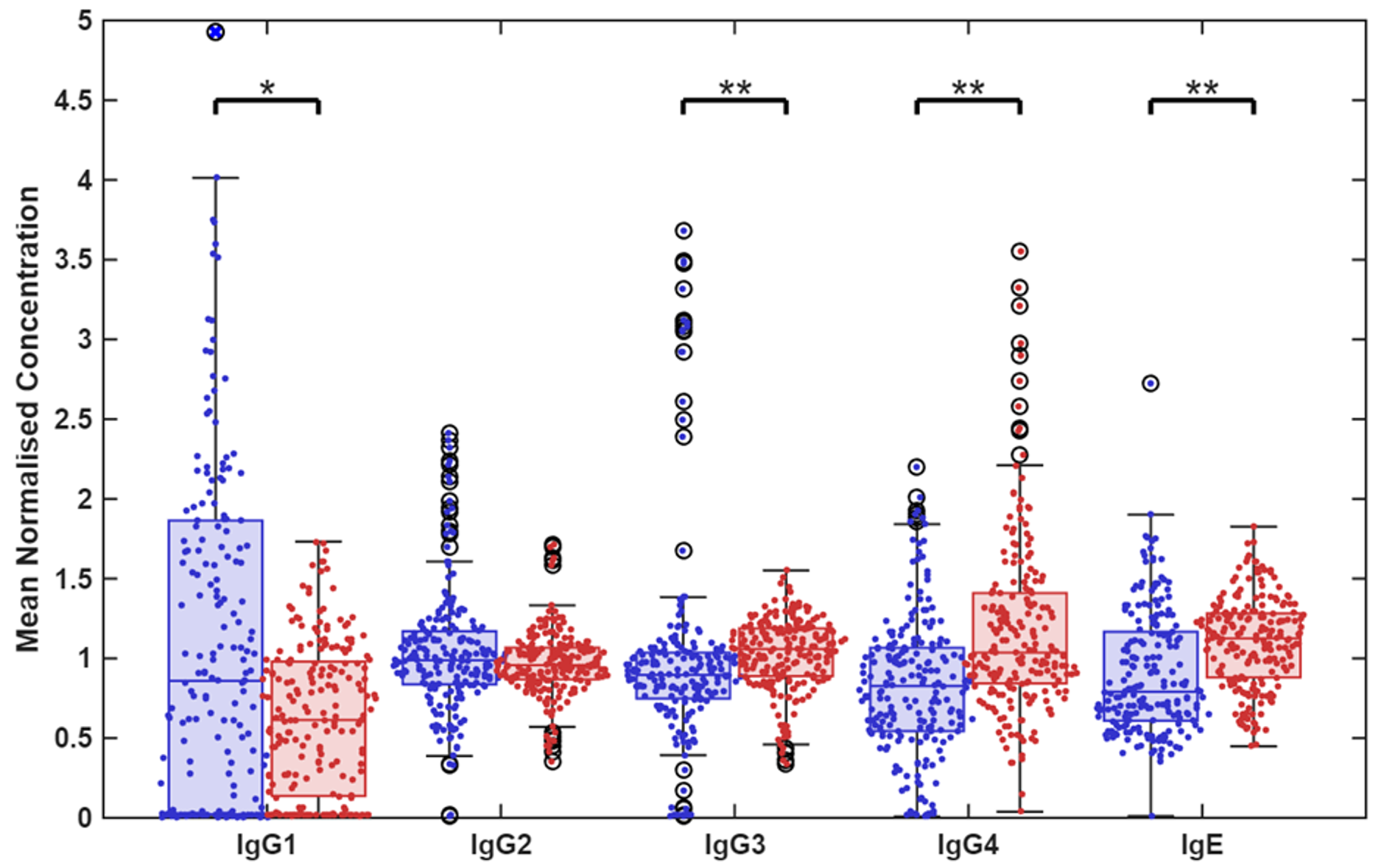
Figure 1: The profile of control patients (blue) compared to those with long COVID (red) for different IgG subtypes and IgE

Our preliminary data (n=30, 2 groups) highlights differences for multiple IgG subclasses and IgE between controls and those suffering from long COVID; Figure 1.

On average, IgG1 appears lower, whilst IgG3, IgG4 and IgE are higher for long covid samples (red), compared to controls (blue).

Further information about these findings are available online, available here: Mass-Standardised IgG Response to Fourteen SARS-CoV-2 Spike Protein variants and Antibody Subclass analysis for IgG subclasses and IgE for a Long COVID Patient Cohort

The IgX map, therefore, can provide additional insights for underlying biological mechanisms that mean individuals are unable to clear the virus, driving the symptoms seen. In particular, it may provide a characterisation for those within the uncharacterised classification cohort.

Our test has an initial focus on IgG1 and IgG4 antibodies.
Case Study

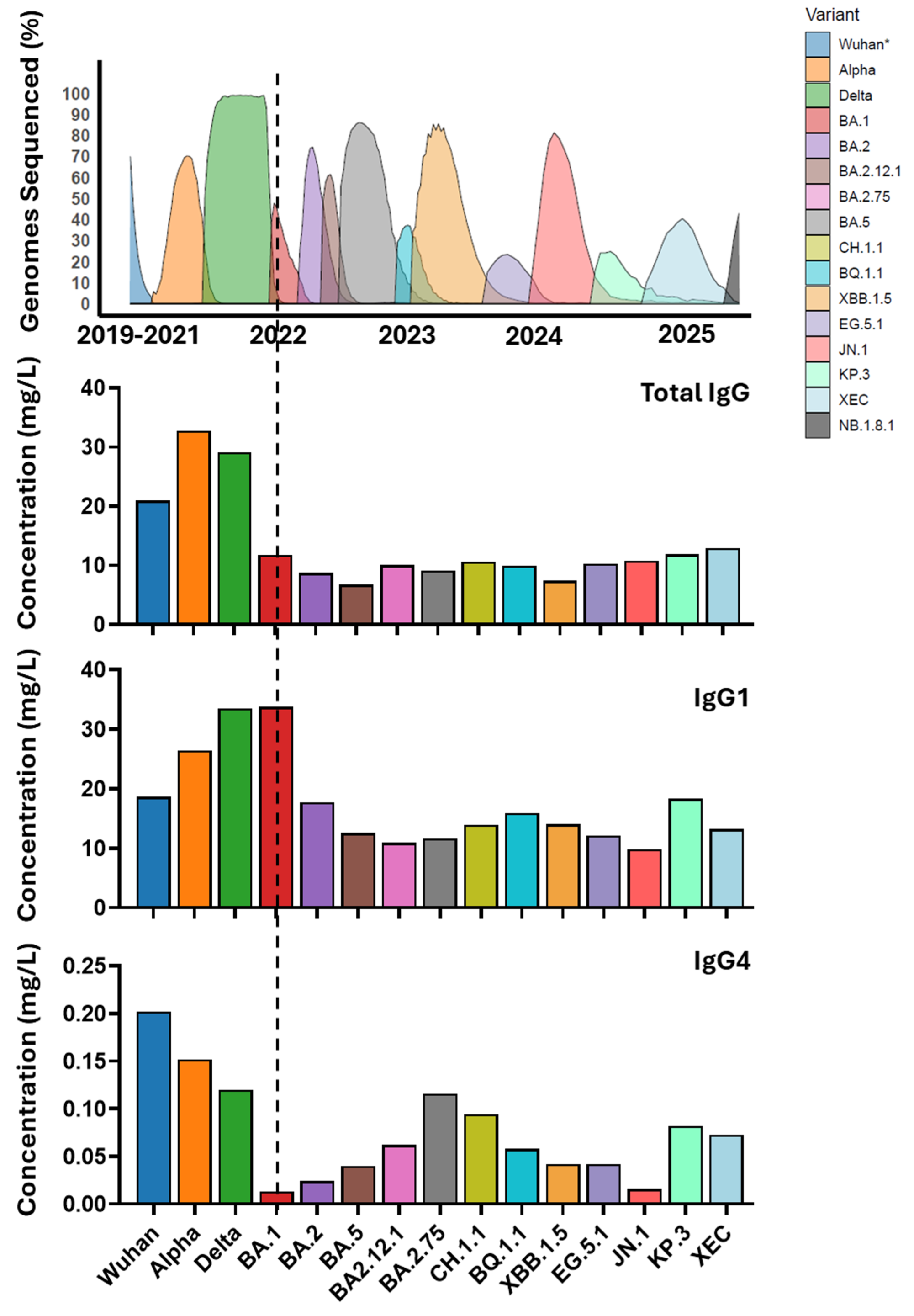
In the following case study, symptoms started in early 2022, consistent with the circulating BA.1 variant.

For total IgG antibody response, the antibody concentrations are within range/uncharacterised.

However, when sub-dividing into IgG subtypes, we see

  • IgG1 (hyperimmune)
  • IgG4 (hypoimmune)

Whilst this is different to the preliminary trend we have seen for IgG1 and IgG4 subtypes, it suggests underlying altered immunity.

(This individual also tested positive for Spike protein in the blood compared to controls).

What this means

In short; underlying altered immunity. A hypoimmune IgG4 response may indicate a potential IgG4 deficiency? Importantly, insufficient IgG4 levels can indicate susceptibility to recurrent infections and increase risk to other health issues such as autoimmune disorders – things now commonly associated with long COVID. Whilst further diagnoses from a medical professional would be required to confirm findings, it could indicate benefits from certain treatments such as IVIG as part of longer-term management plans.

Figure 2: Antibody concentrations for total IgG, IgG1 and IgG4 antibodies in the same individual, presenting with long COVID symptoms in 2022 following a likely BA.1 Omicron infection.

Why Choose the Attomarker
IgX Test?


Accuracy

Reliable biomarkers provide precise health insights.

Convenience

Suitable for use in healthcare settings and at home.

Comprehensive

Covers a wide range of fertility health indicators.